
As a lifelong New Yorker, I know how resilient the metropolitan region is. While New York’s obituary has been written many times over, we all know – in fact, the entire world knows – that you can never count New York out.
But
today we are facing an enormous challenge, unlike anything we’ve seen in a
century. The New York metropolitan region has taken the brunt of the impact of the
coronavirus. The loss in terms of human lives is incalculable. And the economic
impact is still unfolding.
Now,
as we turn the corner in our battle against the virus, we are beginning to
focus on rebuilding our regional economy. The key to moving forward will be the
way that government and the private sector work together to prove that this city
can once again be a healthy and safe place to live, work, invest and entertain.
And, a well-functioning and safe mass transit system will be critical.
New York City’s regional transportation system is critical to the health and operation of our city and the real estate industry, which supports more than 600,000 jobs region-wide.
I would also like to remind Congress that the Port Authority represents a region of 20 million people that accounts for 15 percent of the nation’s GDP. That is why I strongly support the Port Authority’s request for direct federal funding to offset revenue losses that are unprecedented in the agency’s 99-year history. Revenue from our airports alone has dropped by 97 percent, and bridge and tunnel traffic is down 50 percent.
Current
estimates show the Port Authority will have a reduction in revenue of
approximately $3 billion due to the COVID-19 crisis over the next 24 months.
Revenue is the lifeblood of the Port Authority, which differs from other
government entities in that it takes no taxpayer dollars and is completely
self-sustaining based on revenues from business partners, fees and fares.
As
a result of this projected $3 billion revenue loss, the Port Authority will be
forced to reconsider its capital plan — including drastic cuts to a variety of
critical infrastructure projects. These projects, as currently planned, include
public-private partnerships that would leverage more than $10 billion in
committed private capital, while creating more than 100,000 direct and indirect
jobs.
As
Congress considers aiding states and other local governmental units, it should
assist financially independent, multi-state entities like the Port Authority
that provide critical services that would otherwise fall to states.
The
Port Authority of New York and New Jersey is perfectly suited to bring together
the resources of the public and private sector to achieve our goal of restoring
the region’s economy. During my career, both in government and in the private
sector, I have not encountered another public agency that has used public
sector funding to so effectively leverage private investment in projects that
have reenergized the region’s economy.
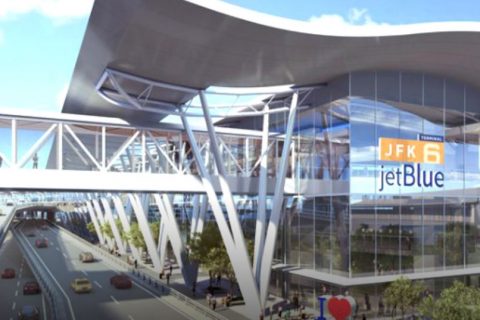
Just as an example, the Port Authority’s capital project to transform JFK Airport into a modern, international gateway uses roughly $1 billion in Port Authority funds to leverage an additional $12 billion in private investment. The ongoing project to build a new LaGuardia Airport also leverages two-thirds of the $8 billion cost from private investment.

The
Port Authority has proven itself before. After the September 11 terror attacks,
the federal government delivered critical funding to rebuild Lower Manhattan.
The Port Authority was a lead partner in that effort, harnessing private and
public sector resources to rebuild the World Trade Center, restore PATH
commuter train service and create a new train hall. Lower Manhattan was rebuilt
better than before with new office towers, housing, retail and parks.
When
you combine both public and private investment, the Port Authority capital plan
would drive $20 billion of capital spending in the next five years. That
spending will provide much needed stimulus to our economy. It will put men and
women back to work, allow those workers to invest in their families and to buy
homes, and will leave behind a legacy of infrastructure that will foster
growth. We cannot afford to walk away from this opportunity at this critical
juncture.
If
Congress wants to rebuild our economy, create jobs and lay the foundation for
economic growth, it should include a specific allocation for the Port Authority
equal to its revenue loss. An investment in the Port Authority is an investment
in more than just our region – it’s an investment in our national economy.
James Whelan is President of the Real Estate Board of New York.