A survey of multifamily property owners shows a dire situation for the owners of small buildings in New York City.
The Community Housing Improvement Program (CHIP) found that nearly two-thirds of all commercial properties located in rent-stabilized buildings have failed to pay any rent so far in May. Additionally, residential rental income is roughly 20 percent behind expected returns so far this month, which trails behind national averages.
The data, collected by surveying the owners and operators of more than 100,000 units of rent-stabilized housing, also revealed that nearly a quarter of residential tenants are not paying any rent. It is clear that New York City remains the epicenter of the economic disaster caused by the COVID-19 pandemic.

“Unless the federal government steps in to help renters and owners in a big way, we are going to see a housing disaster the likes of which we have never seen,” said Jay Martin, Executive Director of CHIP.
“Congress must provide financial aid directly to renters and the state must match that with property tax relief for owners or in weeks, not months, we will see buildings going under.”
Respondents to the survey reported that they collected 82
percent of residential rent in April.
Commercial rent collection was only 34 percent. Many rent-stabilized buildings have
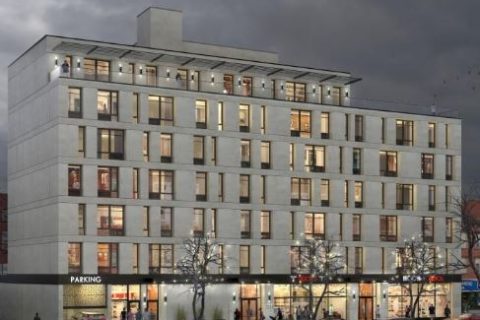
commercial storefronts on the first floor that subsidize residential tenants
who pay vastly below market rate.
“There are hundreds of buildings in New York City operating
at a loss because of COVID-19 and many of them will not be able to survive
another month without help,” Said Martin. “If officials do not immediately
target relief to lower income renters and small owners who have mounting
monthly expenses, they will not be able to reverse the damage this crisis will
have on our city.”
The survey also looked at an additional subset of buildings
who have been targeted by public rent strikes. It found that rent collection in
those properties was around 70%, only slightly trailing the larger trends for
residential rent collection. While the
sample size is small, the data suggests that political activism is not a major
factor in the decline in residential rent collections for the month of May.
The survey was conducted from May 13 to May 18. It included
a balanced mix of small property owners (less than 50 units), larger property
owners (more than 1,000 units) and the majority of respondents own or operate
portfolios in between those ranges.
As Executive Order signed by Governor Andrew Cuomo has
provided some relief for New York state property owners affected by COVID-19
and there is currently legislation in the New York State Senate (Senate Bill
8125-A) and Assembly which would allow a commercial landlord suffering financial
hardship due to tenants’ not paying rent to suspend a fraction of the mortgage
payments for 90 days.
A group called NYC Landlords Unite has also raised a
petition seeking Property Tax and Mortgage forgiveness. “We are the state’s
customer, paying for salaries, social programs, infrastructure and beyond,”
says the group’s website. “We cannot sit by idly as the system continues to
bleed us dry. Even tenants continue to receive aid, while landlords are offered
nothing. No one is considering our expenses, maintenance, landlord/renter
issues.
“We will not sit by as our property is taken and we are left
with nothing. We will fight for property tax relief because it’s the right
thing to do.”